 By: Ron Dunsky, Climate & Energy Committee Member
It’s springtime, which means that along with the welcome sounds of birds, dogs, kids playing and bicycles riding we can also expect the less welcome arrival of gas-powered lawn and landscaping equipment. As the season progresses, this will turn into a continuous cacophony of blowers, mowers, weeders, and whackers.
Gas-powered lawn and landscaping equipment impact the climate, human health, quality of life, affordability/economics, efficiency, and regulations.
The Science
Gas-powered lawn machines have a deleterious impact in multiple ways:
-
- Emissions: The broad scientific consensus—across regulators, academic studies, and environmental agencies—is that gas-powered lawn and landscaping equipment (often called “small off-road engines,” or SORE) are disproportionately high emitters of carbon and other pollutants relative to their size and usage. This is true not only for CO2 but also for Hydrocarbons (HC) , Nitrogen oxides (NOx), and other particulate matter. Operating a gas-powered leaf blower for one hour, for example, is the equivalent of driving a modern car hundreds of miles, in terms of total pollutants emitted.
- Human Health: There’s an equally broad consensus on the negative health impacts created by these machines:
- Respiratory/cardiovascular diseases are tied to emissions.
-
- Noise: Gas-powered equipment produces 85–100+ decibels , which exceeds thresholds associated with hearing damage (long-term exposure), sleep disruption, stress and cardiovascular effects. Other studies have linked prolonged exposure to excessive noise to hypertension, heart disease, and cognitive impacts (especially in children).
These environmental and health effects are exacerbated by the fact that the points of impact of these machines are highly concentrated – creating intense, localized pollution plumes at ground level, near people often exposed within a few feet. Smaller 2-stroke engines have even worse impact because they operate inefficiently. Leaf blowers are often singled out as one of the worst offenders on all counts. It is true that newer equipment types, for example machines with four-stroke engines, are more efficient and potentially less harmful – but there is a vast installed base of older generation gas machines out there, and turnover to newer models can be slow.
 The counter view can be summarized as this: the overall impact of these machines is disproportionally low in terms of their total contribution to emissions; population-wide health impact is harder to quantify vs. major sources (e.g., vehicle traffic); real-world exposure varies significantly by distance, duration, and usage patterns.
This is not an “Is it harmful?” debate but rather “Whether and what to do about it” debate.
Economics, Business, Affordability
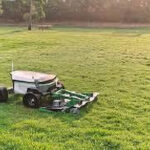
Gas-powered equipment has been around for decades, so there is an extensive ecosystem of manufacturers, distributors, and dealers that deal in this commodity at every price point. Initially, electric-powered lawn equipment was more expensive and had a major performance disadvantage. Newer generations of battery-powered lawn equipment have shown material gains through improvements in battery energy density, efficiency, and swappable battery ecosystems. The cost of battery-powered equipment has come down significantly, sometimes achieving parity with gas-powered machines, because of their growing market share. Sales of electric lawn equipment (battery + corded) are now running between 35%-50% of sales in the consumer market, with the fastest transition occurring in the leaf blower segment. However, the commercial market tells a different story: electric lags at about 5%-15% of new sales. Professional landscapers have higher runtime needs, quicker refueling speed, and own a lot of existing fleet.
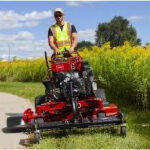 An individual or a lawn business that has invested in legacy gas-powered equipment is being asked to potentially take an economic hit in order to switch to electrical versions. This is why regulatory or legislative efforts to deal with this challenge frequently include financial incentives (e.g. subsidies or tax breaks) for consumers to switch to electrical equipment, recognizing that there is an affordability and economic fairness component to this issue, particularly for small businesses.
Regulatory and Legislative
Multiple states and municipalities have been passing laws to accelerate the phasing out of gas-powered lawn machines. The dominant regulatory approach is a phased, hybrid model: targeted restrictions (especially on high-impact equipment like leaf blowers) combined with financial incentives and transition support—implemented first at the local level and increasingly at the state level. Common to most initiatives:
Sticks (restrictions / mandates)
-
- Sales bans or phase-outs (especially for new equipment)
- Restrictions
-
-
- Time-of-day limits
- Seasonal bans (e.g., peak summer ozone periods)
-
- Noise limits
-
-
- Decibel caps enforced via local ordinances
-
- Equipment-specific bans
-
-
- Most commonly gas leaf blowers
-
- Fleet requirements
-
- Government or contractor fleets required to electrify
Carrots (incentives / transition support)
- Rebates & vouchers
-
-
- Trade-in programs for gas → electric equipment
-
- Grants for commercial landscapers
- Public fleet conversion funding
- Education campaigns
- Procurement preferences (electric-first purchasing rules)
Most policies avoid abrupt bans and instead use:
-
- Phase-in timelines (2–5+ years)
- Priority targeting
-
-
- High-density residential zones
- Government fleets first
- Commercial operators before homeowners
-
- Grandfathering
-
- Existing equipment allowed for a period
Examples of Legislation Across the US
California
Policy:
- Ban on sale of new gas-powered small off-road engines (effective 2024)
- Applies to:
- Leaf blowers, trimmers, small generators, etc.
Carrots:
- ~$30M+ in incentives and rebates
- Focus on commercial landscaping businesses
New York
Policy (enacted via state budget legislation)
- State agencies are required to begin transitioning to zero-emission lawn equipment
- Applies to:
- State-owned and operated equipment
- Timeline:
- Gradual procurement shift (mid-2020s onward)
Unlike California, New York’s policy is neither a market-wide mandate nor a ban. There are several bills that have been introduced in the NY State legislature that would create more California-like laws (e.g., bills (S.1574 and A.2657), but so far they have failed to pass in multiple legislative sessions.
Municipalities In the absence of political will at the state level, local governments often take. For example:
New York City
- Seasonal ban on gas leaf blowers , June 1 – September 30
Southampton
- Seasonal restrictions on gas leaf blowers
- Movement toward tighter controls
East Hampton
- Among the most aggressive in NY:
- Phased restrictions
- Increasing push toward full electrification
Ithaca
- Considering / implementing stricter sustainability policies
- Part of broader climate action framework
Themes common to many local initiatives:
1) “Leaf blower first” strategy
- Politically and practically easier
- Targets:
- Highest noise complaints
- Highest emissions intensity
2) Seasonal or partial bans as steppingstones
- Example:
- Summer-only bans → full bans later
- Helps:
- Build public acceptance
- Reduce immediate economic impact
3) Strong alignment with broader policy goals
These regulations are often bundled with:
- Climate action plans
- Air quality improvement strategies
- Noise reduction initiatives
Rights
None of the above even considers the sheer disruptive nature of these machines, as they burrow into our brains in the middle of the peaceful enjoyment of our neighborhoods. These types of impacts open up a distinct category of discussion – how one person’s lawn aesthetics is another person’s misery index. This fits into a long-established legal framework that considers the line where personal rights of one type infringe other people’s rights of a different sort. For example, property rights vs. “quiet enjoyment” rights; or “nuisance” laws that restrict certain activities when they have demonstrably negative effects on others (for example: smoking bans; noise restrictions related to music, construction or parties; backyard burning bans; vehicle idling laws).
When does a private activity impose costs on others that justify regulation?
- Is the harm:
- Material vs. trivial?
- Avoidable vs. inherent?
- Is the activity:
- Essential / high-value?
- Replaceable with lower-impact alternatives?
Support
Advocacy for bans and/or transition away from gas-powered equipment comes from these main categories:
- Public health and medical organizations, like the American Lung Association and the American Public Health Association
- Environmental NGOs and advocacy groups, like the Sierra Club, the NRDC, and the Environmental Defense Fund
- Local governments and community leaders
- Electric equipment manufacturers and the clean-tech industry
- Residents and neighborhood associations
- Climate-focused policy coalitions
Opposition
Opposition to legislate the transition away from gas powered to electric powered equipment generally falls into these categories:
- Equipment manufacturers, like the Outdoor Power Equipment Institute (OPEI)
- Landscaping industry & contractor associations
- Industry-aligned policy & advocacy groups, like the National Federation of Independent Business
- Homeowner / property rights advocates
- Conservative / limited-government policy groups
Most mainstream opponents do NOT claim that gas equipment has zero environmental or health impact. Instead, they argue that the magnitude and policy priority are overstated and the solutions are not yet practical at scale.
 Summary
The science around the health and environmental impacts of gas-powered lawn machines is not really debated – they are significant and harmful. The nuance comes with the question of whether this category of problem is a legitimate focus of public policy and citizen activism relative to other categories of environmental concern. There will obviously be legitimate debate on how to practically address these questions, which ultimately will be resolved through a combination of public awareness and education, shifting public attitudes and consensus, various types of legal initiatives, and perhaps in the future major court challenges. In this respect, the effort to ban and/or transition away from gas-powered lawn equipment resembles other legacy habits and practices once considered socially “normal” and acceptable, like smoking in public spaces, unrestricted pesticide use, and driving without a seatbelt. And of course, under it all is economics – as electrical alternatives become more powerful, less expensive, and broadly available; that is, as they scale – they ultimately will win over the market. The questions are how long this will take and how do we accelerate that outcome?