By Dianna Goodwin and Deb Stone, Pollinator and Native Plant Committee
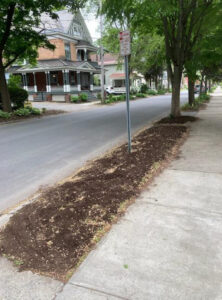
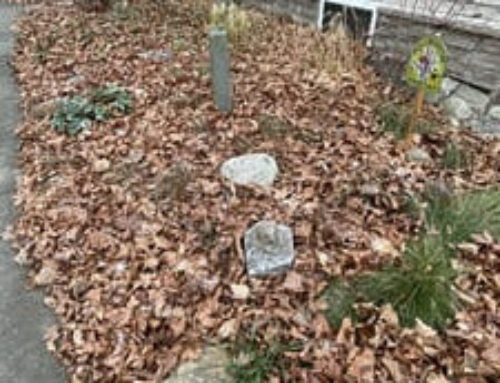
A hellstrip in part sun/part shade with compost added, waiting to be planted.
Insect populations have been plummeting world wide over the last several decades, largely because of climate change, habitat loss and the use of increasingly toxic insecticides. The expansion of cities and their suburbs has been disastrous for native bees, butterflies and other pollinators because their food and nesting areas disappear into building lots and lawns. Suburban lawns are ecological deserts that do not support wildlife and that are often treated with noxious pesticides and chemical fertilizers. Remaining natural habitat is fractured, making it difficult to sustain natural populations of vulnerable insect and bird species.
You can help reverse this trend by planting native flowering plants in your yard that support wildlife instead of turf grass or exotic garden plants. Even if you do not have a large area of land that you can convert to a pollinator garden, you can create habitat on a small piece of land, like a hellstrip. Hellstrips, those narrow pieces of land between the sidewalk and the street, also known as tree lawns or verges, are often neglected areas with poor soil, high salt, and damage from foot traffic. Replacing exotic plants with native plant gardens in adjoining or nearby hellstrips can create a pollinator corridor to feed insects and birds for the entire growing season.
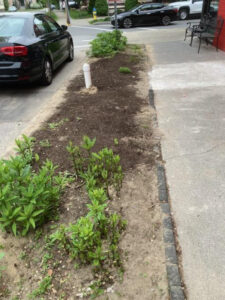
A full sun hellstrip that was a pollinator garden last year. It was destroyed by sewer work in the winter and needs replanting.
We ask that you take the challenge to be a hellstrip hero and turn your verge into a pollinator paradise by getting rid of turfgrass and any invasive exotic plants, like goutweed and garlic mustard, planting native species, and eliminating the use of insecticides, herbicides and fungicides on or near the garden. If you need help planning a hellstrip garden, reach out to us at pollinators@sustainablesaratoga.org. Even planting a few native pollinator plants in an existing garden bed can help save the bees.
To get the ball rolling, members of Sustainable Saratoga’s pollinator committee will create two hellstrip gardens on Spring Street in Saratoga Springs, one in dappled shade and one in full sun, to help others learn how to turn their hellstrips into habitat. We will post pictures of the process and document the growth of the two gardens through this first growing season.
If you turn your hellstrip into habitat, or have already done so, send us photos! We will post them to inspire other people to ditch their grass in favor of biodiversity. You can also register your native plant hellstrip garden on the Pollinator Pathway and/or Homegrown National Park websites to become part of the nationwide movement to turn yards into habitat.
Less lawns, more life!